

Original Article: JRCRS. 2026:14(1):41-45
8-Occurrence of Musculoskeletal Symptoms, Among Teachers of Special Education Institutes in Rawalpindi and Islamabad: A Cross-Sectional Study
Bisma Batool1, Musab Pervaiz Butt2, Muhammad Rafay Rasool3, Tayyaba Arzoo Qureshi4, Tehreem Aziz5, Saman Shaukat6
1 2 3 4 5 Student, Foundation University Islamabad, Pakistan
6 Lecturer, Foundation University Islamabad, Pakistan
Full-Text PDF DOI: https://dx.doi.org/10.53389/JRCRS.2026140108
ABSTRACT:
Background: Teaching students with mental, physical, and learning disabilities is a highly demanding nature of work, which often leads to varying degrees of musculoskeletal disorders worldwide. Nevertheless, there is a limitation of the studies focusing on the occurrence of musculoskeletal symptoms in this group. Therefore, the purpose of this research was to investigate the occurrence of musculoskeletal symptoms among special education teachers in Rawalpindi and Islamabad. Pakistan.
Objective: To determine the prevalence of musculoskeletal disorders among teachers of special education institutes.
Methodology: This cross-sectional study was conducted between September 2023 and June 2024. Two tools were used: the primary tool was the Nordic Musculoskeletal Questionnaire (NMQ), and the second tool was a socio-demographic questionnaire developed by the research team. With the use of Rao-soft, a sample size of 109 was obtained; however, data were collected from 150 special education teachers aged 24 to 50.
Results: The average age of the participants was 36 years (SD = 8.66). In total, musculoskeletal issues were reported by 66.3% of special education instructors. The most often impacted body parts within the previous 12 months were the shoulders (32%), lower back (35.3%), and neck (36.7%). On the other hand, lower back pain was the most common complaint reported during the previous seven days (19.3%).
Conclusion: Musculoskeletal problems were shown to be quite prevalent among special education teachers in this study, affecting 66.3% of participants. Most frequently, the neck was affected, then the shoulders and lower back. These results emphasise how crucial it is to improve workplace design, implement ergonomic interventions, and embrace preventive measures in order to reduce the likelihood that special education instructors in Pakistan would experience musculoskeletal complaints.
Keywords: Special education teachers, Musculoskeletal disorders, Musculoskeletal symptoms, work-related musculoskeletal disorders.
Introduction:
Special education instructors are increasingly experiencing musculoskeletal issues as a result of their extremely physically demanding jobs.1 Musculoskeletal symptoms refer to discomfort in the muscles, tendons, and nerves caused by persistent, repetitive, and irregular movements, which can vary in intensity and duration from mild to moderate to severe.2 Additional prevalent musculoskeletal complaints encompass edema, paresthesia, and loss of sensation in the affected region, along with restrictions in joint mobility.3 Musculoskeletal symptoms may arise from diverse causes and risk factors, including demographic elements such as age, gender, obesity, a progressively sedentary lifestyle, and occupational influences like work environment, persistent physical stress, awkward postures, inadequate ergonomic practices, and repetitive movements, all of which can adversely affect the musculoskeletal system.4 These exercises often cause microtears or inflammation, along with various minor injuries to muscles, joints, soft tissues, and nerves, potentially resulting in numerous musculoskeletal problems.2
By 2020, musculoskeletal problems affected 494 million individuals worldwide, representing a remarkable 123.4% rise from the 221 million reported in 1990. This significant rise highlights the escalating influence of these diseases on the worldwide populace. Musculoskeletal conditions affecting the bones and joints have become a major health problem, causing increased disability and affecting the quality of life of millions of people all over the world.5 Musculoskeletal disorders are anticipated to rise by a minimum of 50% from 2020 to 2050 due to aging.5
Regular school teachers spend more time standing for extended periods of time, writing on the board, reading aloud, and grading assignments than special education teachers do. Although these activities rarely require intense physical effort, they may cause bodily discomfort.6 Teachers in special education face more difficult assignments. They work with students who have a variety of learning, emotional, mental, and physical challenges.7,8 including people with mood, sensory, physical, auditory, and visual impairments; dyslexia; nonverbal communication issues; emotional and behavioral concerns such attention deficit disorder (ADD); and concentration problems (ADHD).9 Providing nursing care and physical support to students, such as changing diapers, feeding, lifting, transferring, repositioning, transporting pupils, and assisting with walking for those with limited mobility, is a common task for special education teachers.10 They necessitate constant trunk flexion and extended bending, kneeling, stooping, and crouching positions.9 These teachers are at a higher risk of acquiring musculoskeletal symptoms and eventually developing musculoskeletal illnesses due to the prolonged exposure and sustained physical effort required to conduct these duties.7, 8
The 2022 narrative review indicated that the prevalence of musculoskeletal problems among special education instructors ranged from 38.7% to 94%, while the prevalence among ordinary teachers was between 48.7% and 73.7%.11 In a different study, researchers found that 77.9% of special education instructors had musculoskeletal issues. The lower back (60.7%), shoulder (56.6%), neck (53.3%), knee (42.6%), upper back (41%), and foot (41%), were the body parts most frequently impacted. Prevalence rates in other body parts were lower, falling below 40%.11
A high prevalence of low back pain (LBP) was found in the majority of research that examined WMSDs among special education school instructors and concentrated on pain in particular body areas, like the low back.9 Additionally, numerous studies have found that special education instructors who work long hours are more likely to suffer from musculoskeletal illnesses (MSDs).11 Research from Pakistan is still scarce, despite several studies conducted in other nations highlighting the significant prevalence of musculoskeletal problems among this population. Consequently, a significant vacuum in the local literature is filled by this study. Because MSDs can result in early retirement, higher absenteeism, worse job satisfaction, and financial losses from medical expenses and compensation, this study is crucial. The study aims to raise awareness and encourage early detection and preventive measures by estimating the prevalence of these conditions among this particular group. Assessing the prevalence of musculoskeletal problems among special education instructors in Rawalpindi and Islamabad, Pakistan, is the goal of this study.
Methodology:
154 teachers voluntarily participated in this descriptive cross-sectional study. A non-purposive convenience sample method was used to get the data. Rao Soft was used to compute the sample size, and after taking into consideration a 50% response rate and a 5% margin of error, the necessary sample size of 109 special education instructors was determined. A total of 150 volunteers from Islamabad and Rawalpindi were enlisted in order to guarantee reliability. Data were collected from a total of 12 special education institutes from 15 February to 15 March, 2024.
Teachers of special education in Rawalpindi and Islamabad, Pakistan, served as the study’s subjects. Participants had to be teachers between the ages of 24 and 50 who had taught in a special education facility for at least a year in order to meet the inclusion requirements.12 The study did not include teachers with pre-existing medical illnesses, such as cancer, amputations, traumas, or neuromuscular diseases. Following standard procedures, ethical approval was secured from the Institutional Research Committee of the Foundation University College of Physical Therapy (Ref: FF/FUCP/932-11/DPTF1911) and the Ethical Review Committee of the Foundation University School of Health Sciences (Ref: FF/FUMC/215-337 Phy/23). Every participant provided written informed permission. No personal or religious convictions were compromised because participation was completely voluntary, confidentiality was scrupulously maintained, and data were gathered in an ethical and transparent manner. To collect the data, two tools were used. The Nordic Musculoskeletal Questionnaire (NMQ), created by Kuorinka et al. and intended to evaluate musculoskeletal symptoms in various body locations, served as the main tool. With a test-retest value of 0.8, sensitivity ranging from 66% to 92%, and specificity between 71% and 80%,10 the NMQ has good reliability. The second tool was a sociodemographic questionnaire created by the researcher that gathered data on age, gender, BMI, and medical history, such as cancer, neurological conditions, or previous injuries. Additionally, it recorded work-related details like duration of employment, school type (private or public), number of working days per week, daily working hours, and contact hours with students. It also recorded the kinds of student disabilities that were managed, including mental, physical, visual, hearing, and intellectual conditions. SPSS version 21.0 was used to analyze the data. Means and standard deviations were used to summarize quantitative information like weight, height, and BMI, whereas frequencies and percentages were used to describe qualitative factors. Since describing the frequency distribution of musculoskeletal symptoms was the study’s main goal rather than evaluating hypotheses, inferential statistical testing was not done.
Results:
Total number of special education teachers who participated was 154, out of which 150 fulfilling the inclusion criteria; therefore, included in the study. The average age of the participants was 36 years (SD = 8.65941), out of which most of the respondents were female (87%). Along with this, according to BMI calculations 52.7% of the teachers had a normal weight, 19.3% were underweight, 24% were overweight, and 4% were reported as obese.
According to work-related variables, 69.3% of special education teachers had 1–10 years of experience. 67.3% were in direct contact with students requiring special care for 5–8 hours per day, while 32.7% had 1–4 hours of direct contact. A total of 79.3% of teachers worked five days a week, while 20.7% worked six days a week.
23.3% of those who worked with students had hearing impairments, 22.7% had multiple disabilities, 17.3% had visual impairments, 10% had intellectual disabilities, and 8.7% had physical disabilities. In the questionnaire, 7.3%, 6%, and 3.3% chose “all,” “any two from above,” and “others,” respectively.
“According to the Standardized Nordic Musculoskeletal Questionnaire (SNMQ), most of the special education teachers who participated in the research reported neck pain as the most frequently present, followed closely by lower back and shoulder pain during the past 12 months. Other commonly affected areas included the knees and upper back. However, the wrists/hands, hips/thighs, and ankles/feet showed moderate symptoms. The least affected region was the elbows. (Figure 1)
On the other hand, by comparing data on musculoskeletal symptoms over the past 7 days, we found that lower back pain was the most frequently reported musculoskeletal symptom, followed by the neck and shoulders. Other commonly affected regions included the upper back, wrists/hands, and knees. Fewer complaints were reported in the ankles/feet, hips/thighs, and elbows. (Figure 2)
In addition, according to the responses received from special education teachers, those who visited a physician more frequently reported musculoskeletal symptoms in the neck, followed by the lower back, upper back, knees, wrists/hands, ankles/feet, hips/thighs, elbows, and shoulders. (Figure 3)
Most of the special education teachers reported that lower back pain interfered with their normal activities, followed by pain in the neck and shoulders. Wrist/hand and knee pain also prevented normal functioning in several participants. However, only a few teachers reported activity limitations due to pain in the upper back, hips/thighs, ankles/feet, and elbows. (Figure 4)
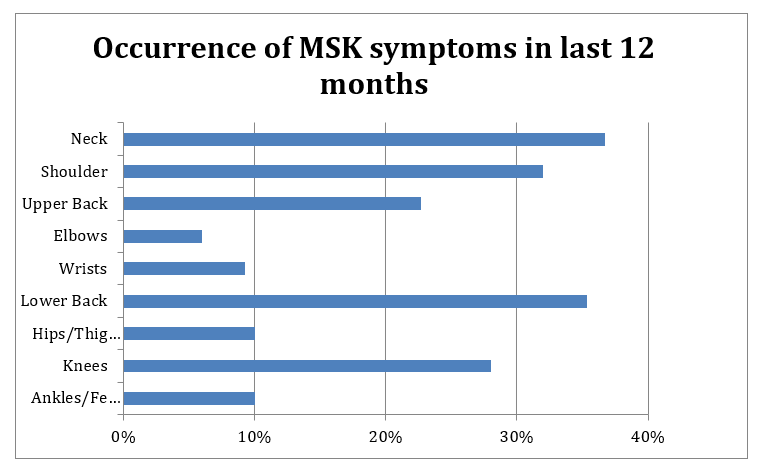
Figure 1: Occurrence of MSK symptoms in the last 12 months
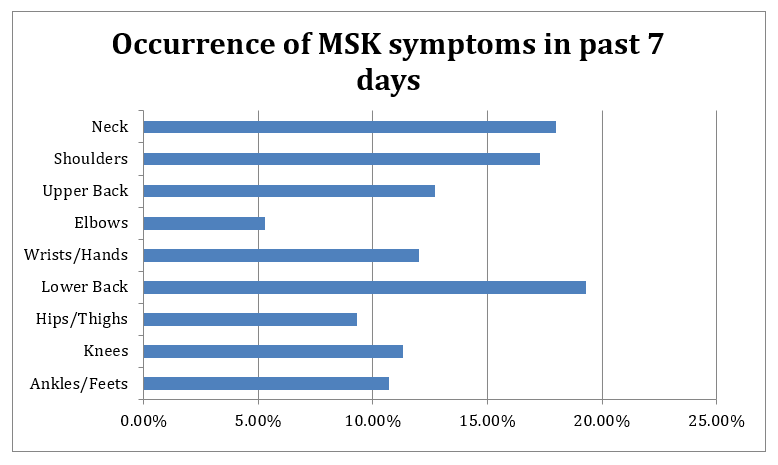
Figure 2: Occurrence of MSK symptoms in past 7 days
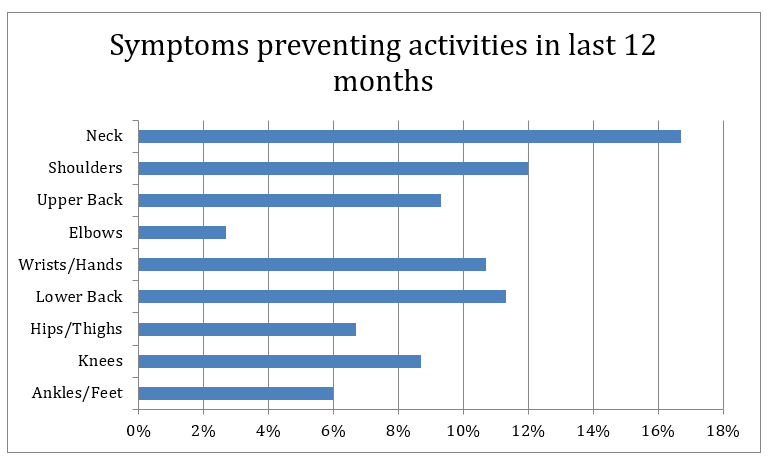
Figure 3: Symptoms preventing activities in last 12 months
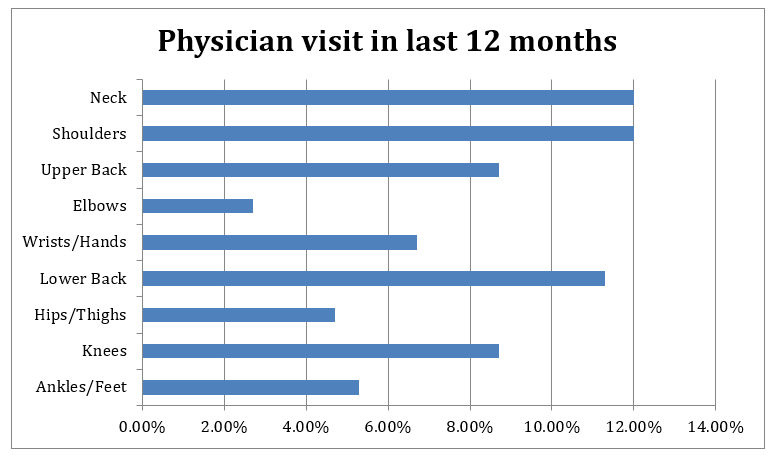
Figure 4 Physician visit in the last 12 months
Discussion:
Educating individuals with mental and physical disabilities is extremely challenging. Globally, research has shown that musculoskeletal diseases are quite prevalent among special education instructors, with rates of 77.9% (2024) in Malaysia, 11 63% in Bolivia (2017),13 and 86% in Taiwan (2016).9 This study, however, is the first to look into the prevalence of musculoskeletal problems among special education teachers in Pakistan. Consequently, studies from other nations have been employed for analysis.
According to the study’s findings, special education teachers had a significant prevalence of musculoskeletal problems during the previous 12 months, especially in the shoulders, neck, and lower back. However, lower back pain was the most commonly reported complaint, followed by neck and shoulder pain in the past 7 days. The high prevalence of neck and lower back symptoms may be related to frequent bending, lifting, and supporting students, as well as prolonged standing and repetitive or awkward postures during daily classroom activities.
These musculoskeletal symptom patterns are also consistent with a 2019 Malaysian study that reported similar findings, indicating that the lower back, neck, and shoulders were the most affected areas, with the lower back reporting the highest rate at 43%, followed by the neck at 30%, and the shoulders at 24%.14 Furthermore, the majority of participants reported having severe neck pain every day, and moderate shoulder discomfort was also often reported daily. A study conducted in 2024 found that 77.9% of special education teachers had musculoskeletal illnesses, which is in line with our findings. The most often affected areas in that study were the neck (53.3%), shoulders (56.6%), and lower back (60.7%), with a lower frequency of 40% in other body parts.3 In comparison, the present study found the neck (36.7%), lower back (35.3%), shoulders (32%), upper back (22.7%), wrists/hands (19.3%), and knees (18%) to be the most affected regions, whereas other body parts showed a prevalence of less than 10% over the past 12 months. These findings highlight that occupational health risks in this profession, particularly musculoskeletal problems, may adversely affect teachers’ work performance and overall quality of life, indicating the need for attention.
In order to lower the likelihood of musculoskeletal problems, it is advised that special education institutions implement ergonomic enhancements and preventive measures. Frequent training sessions that emphasize safe lifting methods, stretching exercises, proper workload management, posture correction, and awareness campaigns may help lessen occupational stress that results in musculoskeletal complaints. It is also advised that instructors get regular health examinations and that workplace wellness initiatives be implemented.
There are a number of restrictions on this study, though. Establishing connections between work characteristics and musculoskeletal symptoms is hampered by the cross-sectional approach. The Nordic Musculoskeletal Questionnaire was used to gather data from self-reported replies; this method may be subject to recollection or reporting bias and is unable to pinpoint the root causes of discomfort. Additionally, the sample was restricted to Islamabad and Rawalpindi, which limits the findings’ applicability to special education teachers in other areas. To learn more about how musculoskeletal illnesses and occupational weariness affect special education teachers’ workability, future research should use longitudinal designs and bigger, more representative samples.
Conclusion:
With an overall incidence of 66.3%, this study finds that musculoskeletal problems are prevalent among special education instructors in Pakistan. While lower back pain was most commonly reported during the last 7 days (19.3%), followed by neck pain (18%) and shoulder pain (17.3%), along with symptoms in other body locations, the most commonly affected areas throughout the previous 12 months were the neck (36.7%), lower back (35.3%), and shoulders (32%). Additionally, the results showed that the majority of the staff members in special education institutions experienced some form of musculoskeletal pain.
References:
- Tahernejad S, Hejazi A, Rezaei E, Makki F, Sahebi A, Zangiabadi Z. Musculoskeletal disorders among teachers: a systematic review and meta-analysis. Frontiers in public health. 2024; 12:1399552.
- Choi K, Park J-H, Cheong H-K. Prevalence of musculoskeletal symptoms related with activities of daily living and contributing factors in Korean adults. Journal of Preventive Medicine and Public Health. 2013;46(1):39.
- Jeffree MS, Abdul Rahim AA, Daud DMA, Pang N, Sazali MF, Sudi S, et al. Predictors of musculoskeletal disorders among special education teachers in Sabah, Malaysia. Heliyon. 2024;10(10): e30873.
- March L, Smith EU, Hoy DG, Cross MJ, Sanchez-Riera L, Blyth F, et al. Burden of disability due to musculoskeletal (MSK) disorders. Best practice & research Clinical rheumatology. 2014;28(3):353-66.
- Gill TK, Mittinty MM, March LM, Steinmetz JD, Culbreth GT, Cross M, et al. Global, regional, and national burden of other musculoskeletal disorders, 1990–2020, and projections to 2050: a systematic analysis of the Global Burden of Disease Study 2021. The Lancet Rheumatology. 2023;5(11): e670-e82.
- Korkmaz NC, Cavlak U, Telci EA. Musculoskeletal pain, associated risk factors and coping strategies in school teachers. Scientific Research and Essays. 2011;6(3):649-57.
- Erick PN, Smith DR. A systematic review of musculoskeletal disorders among school teachers. BMC musculoskeletal disorders. 2011;12(1):260.
- Muto S, Muto T, Seo A, Yoshida T, Taoda K, Watanabe M. Prevalence of and risk factors for low back pain among staffs in schools for physically and mentally handicapped children. Industrial health. 2006;44(1):123-7.
- Cheng H-YK, Wong M-T, Yu Y-C, Ju Y-Y. Work-related musculoskeletal disorders and ergonomic risk factors in special education teachers and teacher’s aides. BMC Public Health. 2016;16(1):137.
- Billingsley BS. Recognizing and supporting the critical roles of teachers in special education leadership. Exceptionality. 2007;15(3):163-76.
- Abdul Rahim AA, Jeffree MS, Ag Daud DM, Pang N, Sazali MF. Factors Associated with Musculoskeletal Disorders among Regular and Special Education Teachers: A Narrative Review. International Journal of Environmental Research and Public Health. 2022;19(18):11704.
- Kuorinka I, Jonsson B, Kilbom A, Vinterberg H, Biering-Sørensen F, Andersson G, et al. Standardised Nordic questionnaires for the analysis of musculoskeletal symptoms. Appl Ergon. 1987;18(3):233-7.
- Payà A. Inclusive and special education policies in South America. Oxford Research Encyclopedia of Education2020.
- Argenan Y. Work-Related Musculoskeletal Disorders (WMSDs) Among Teachers and Student’s Management Assistants in Special Education Schools in Malaysia: University of Malaya (Malaysia); 2017.
| Copyright PolicyAll Articles are made available under a Creative Commons “Attribution-NonCommercial 4.0 International” license. (https://creativecommons.org/licenses/by-nc/4.0/). Copyrights on any open access article published by Journal Riphah college of Rehabilitation Science (JRCRS) are retained by the author(s). Authors retain the rights of free downloading/unlimited e-print of full text and sharing/disseminating the article without any restriction, by any means; provided the article is correctly cited. JRCRS does not allow commercial use of the articles published. All articles published represent the view of the authors and do not reflect the official policy of JRCRS. |